Trimming, milling and polishing in a dental laboratory produce very fine dust. It reaches the air the technician breathes and settles on devices and surfaces. A dust extraction (vacuum) system built into the bench solves the problem at its source.
Where does the dust come from?
- Trimming and cutting plaster models
- Acrylic and prosthetic work
- Finishing zirconia and ceramic restorations
- Trimming and polishing metal frameworks
Benefits of extraction built into the bench
- Technician health: dust is captured before it reaches the breathing zone.
- A clean workspace: the worktop, devices and surroundings stay cleaner.
- Quality: the working point is easier to see and the work stays clean.
- Efficiency: less time spent cleaning.
What to look for
- The extraction hood should be close to the working point and adjustable.
- The filter should be easy to remove and clean.
- The motor compartment should sit under the bench without blocking the legs.
- A glass eye shield adds protection against flying particles.
- A control panel switches the vacuum on and off with one button.
Dust extraction on Incamed benches
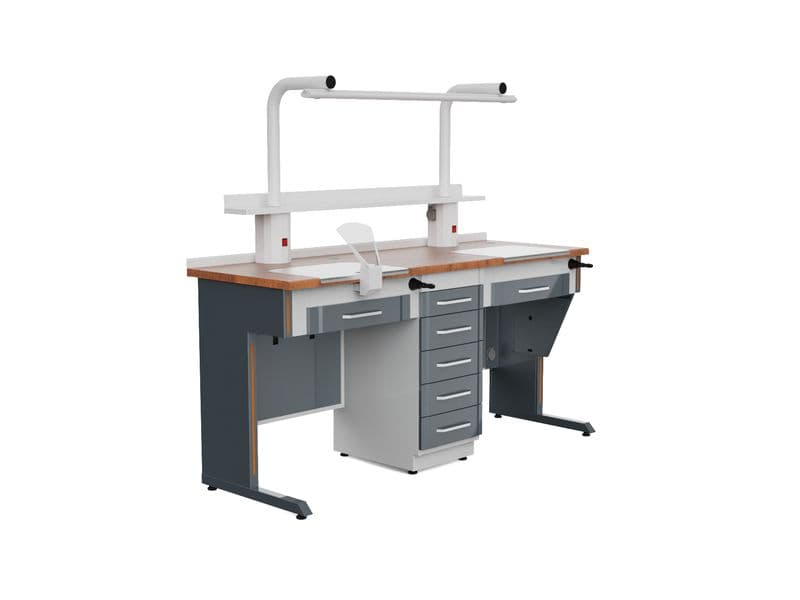
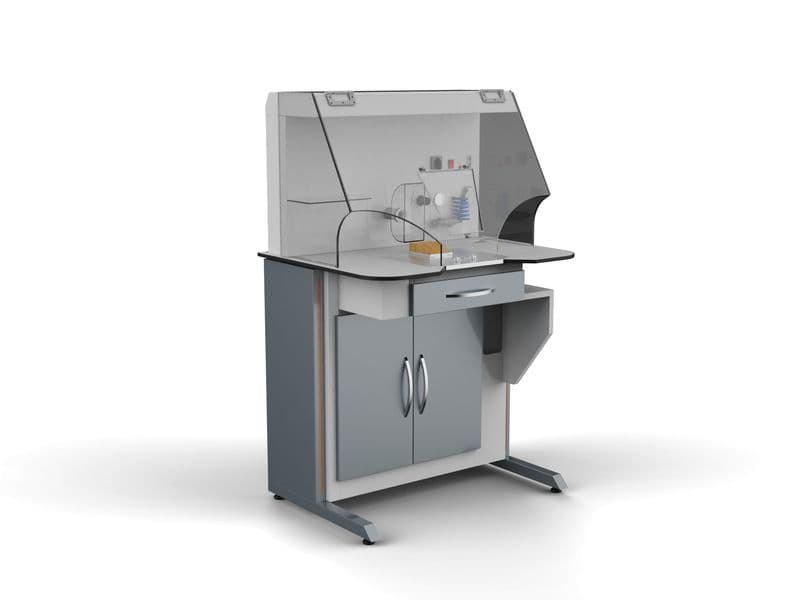
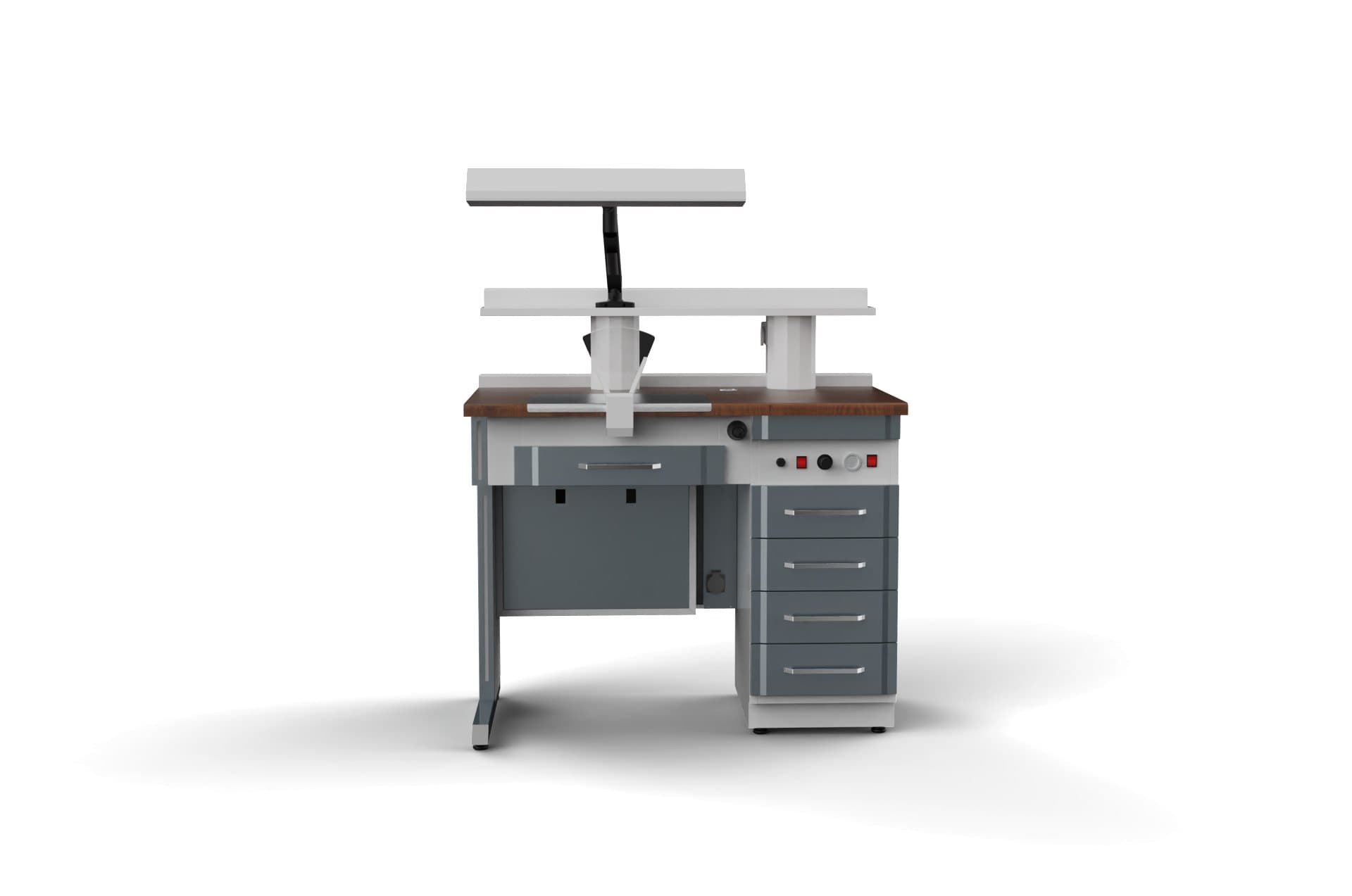
Our technician workbenches come with a filtered vacuum system, an extraction hood and a glass eye shield as standard; the vacuum motor sits in a compartment under the bench. On the models with a control panel (TB1H, TB3H, TB4H) vacuum and lighting are managed from the front panel. For dusty model trimming, the KBM trimming station keeps dust and splashes inside its transparent cabinet.
See our guide to choosing a dental technician workbench for the other criteria.